
Paul Hannaby - All day seminar Sunday 26th October 2025
The theme for the day was to use pewter to enhance woodturning
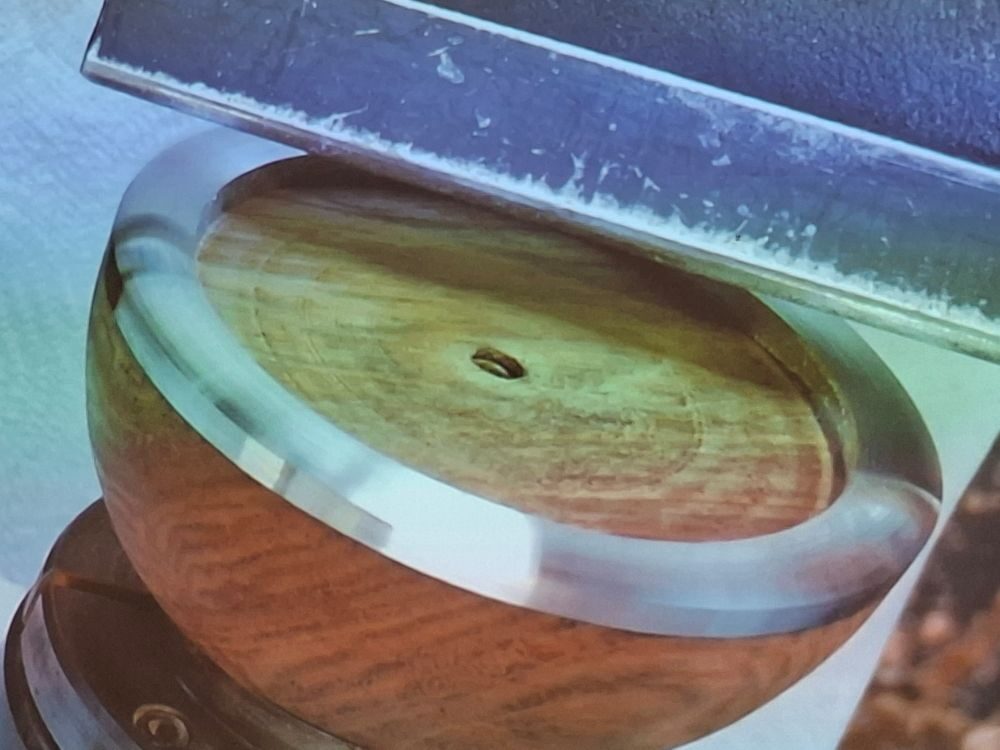
Paul showed us some sample bowls and then quickly turned the outside of his demo piece. After reversing it onto a chuck he faced off the top of the bowl and then cut a groove (mortice) for the pewter rim to be glued into.
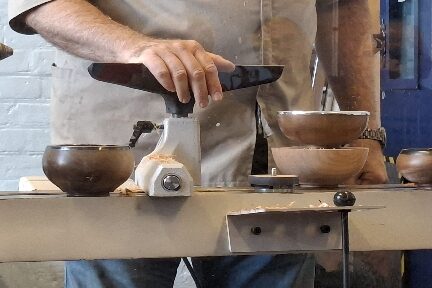
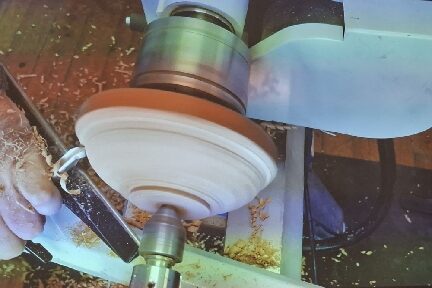
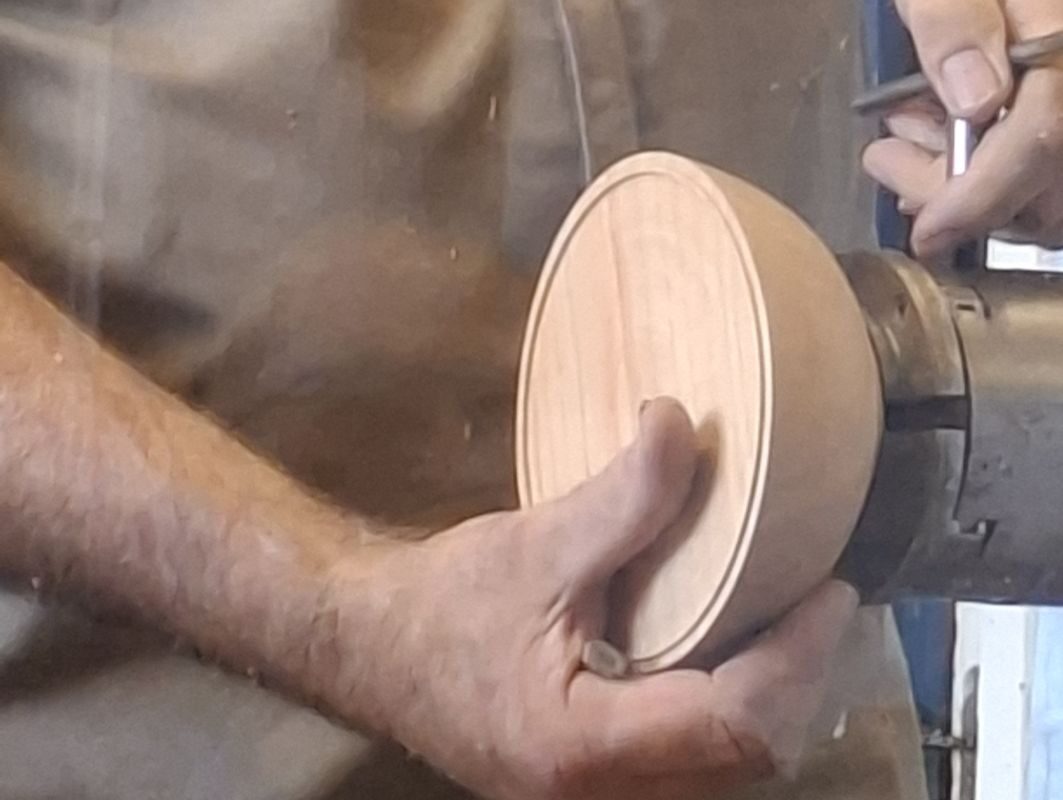
The next task was to cut a mould from a piece of MDF to pour the pewter into. You can use other woods but they must be very, very dry as any moisture will quickly turn to steam and create bubbles in the pewter. Careful measuring is essential at this stage so that the rim you mould locates correctly on the wooden bowl. He also cut the mould for a foot to be added at a later stage.
The pewter is melted in a small electric pot with simple release valve at the bottom to let the molten metal flow with great accuracy. The mould is raised up to be immediately below the nozzle to avoid splashing. The mould must be level and the metal simply flows all the way around (no rotating or shaking the mould is required). Paul gets his pewter in 1 kg ingots and it is lead free. They cost around £30 and will make about 3 rims. See at the bottom of the article for details of suppliers of things shown.
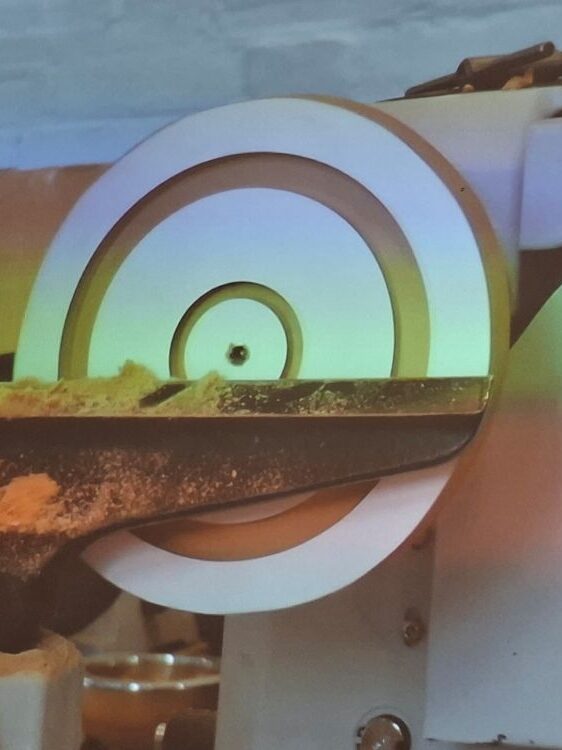
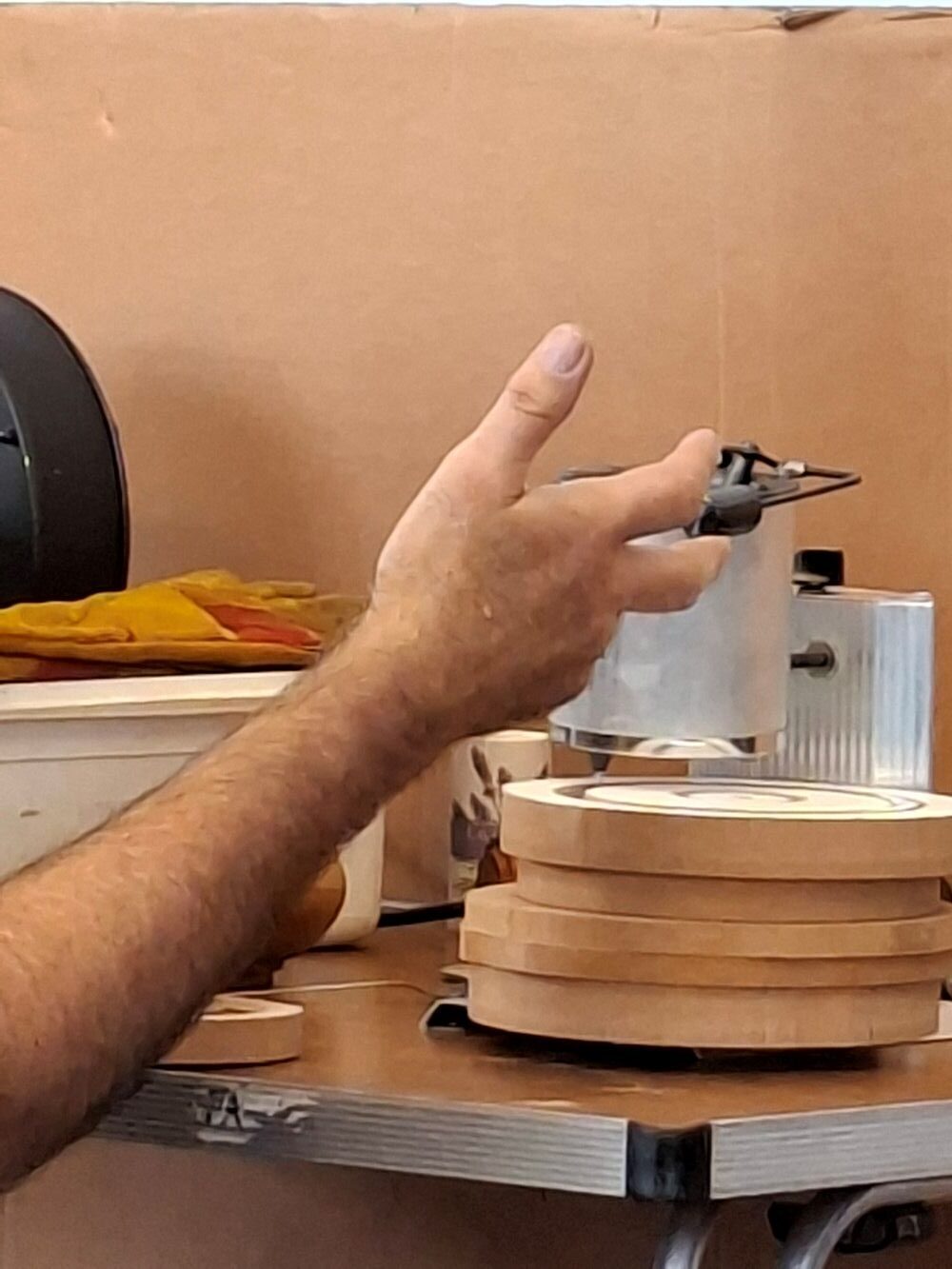
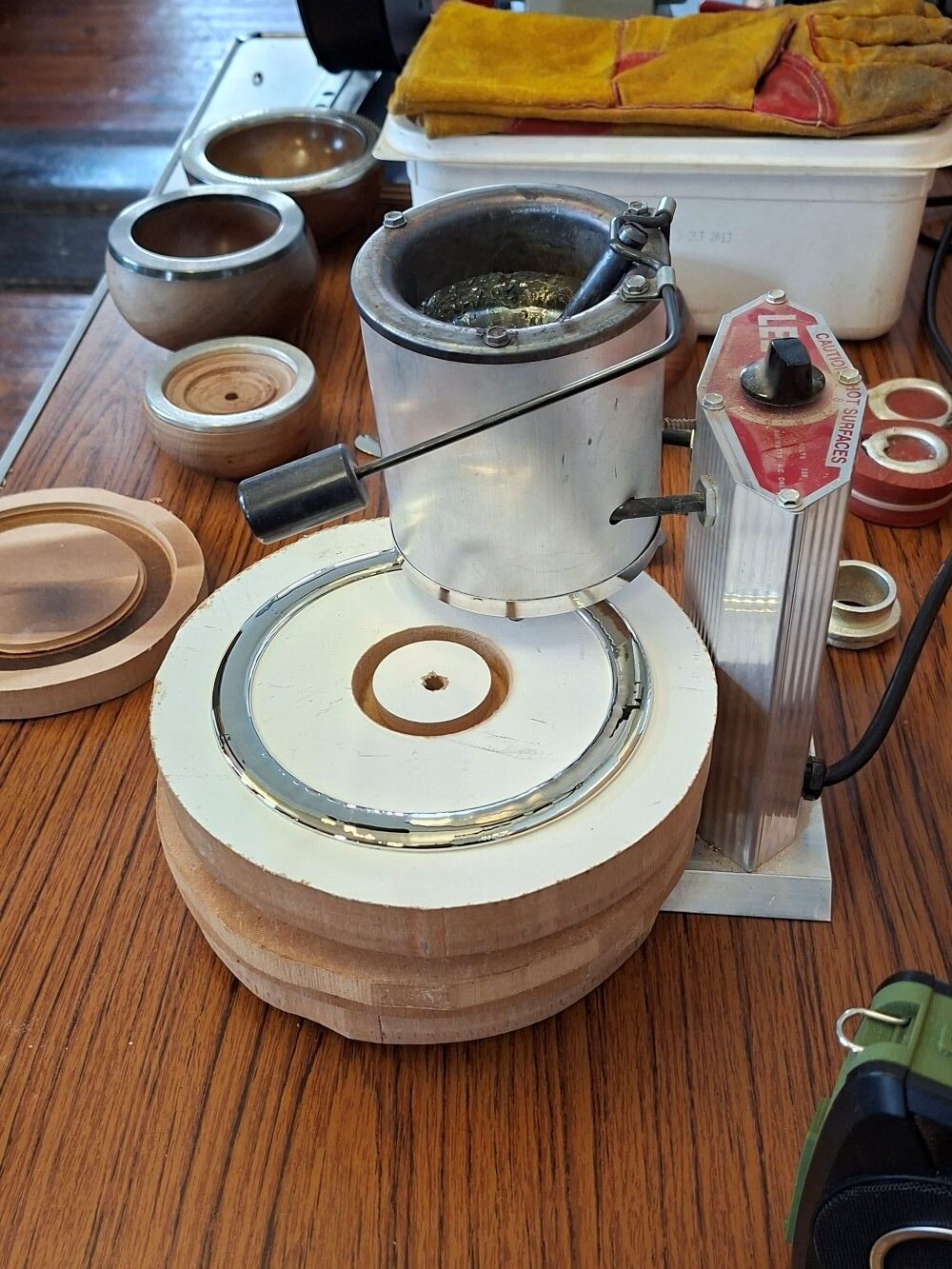
Pewter melts at around 230 degrees C and so it can be done in a saucepan but a scum forms on the top that you don't want in your mould and trying to pour from a saucepan and keep everything safe and 'clean' is not easy. The pot allows the molten metal to flow from the bottom where there is no scum. These pots are around £85. Paul also showed us that pewter can be textured with our normal HSS tools just like wood.
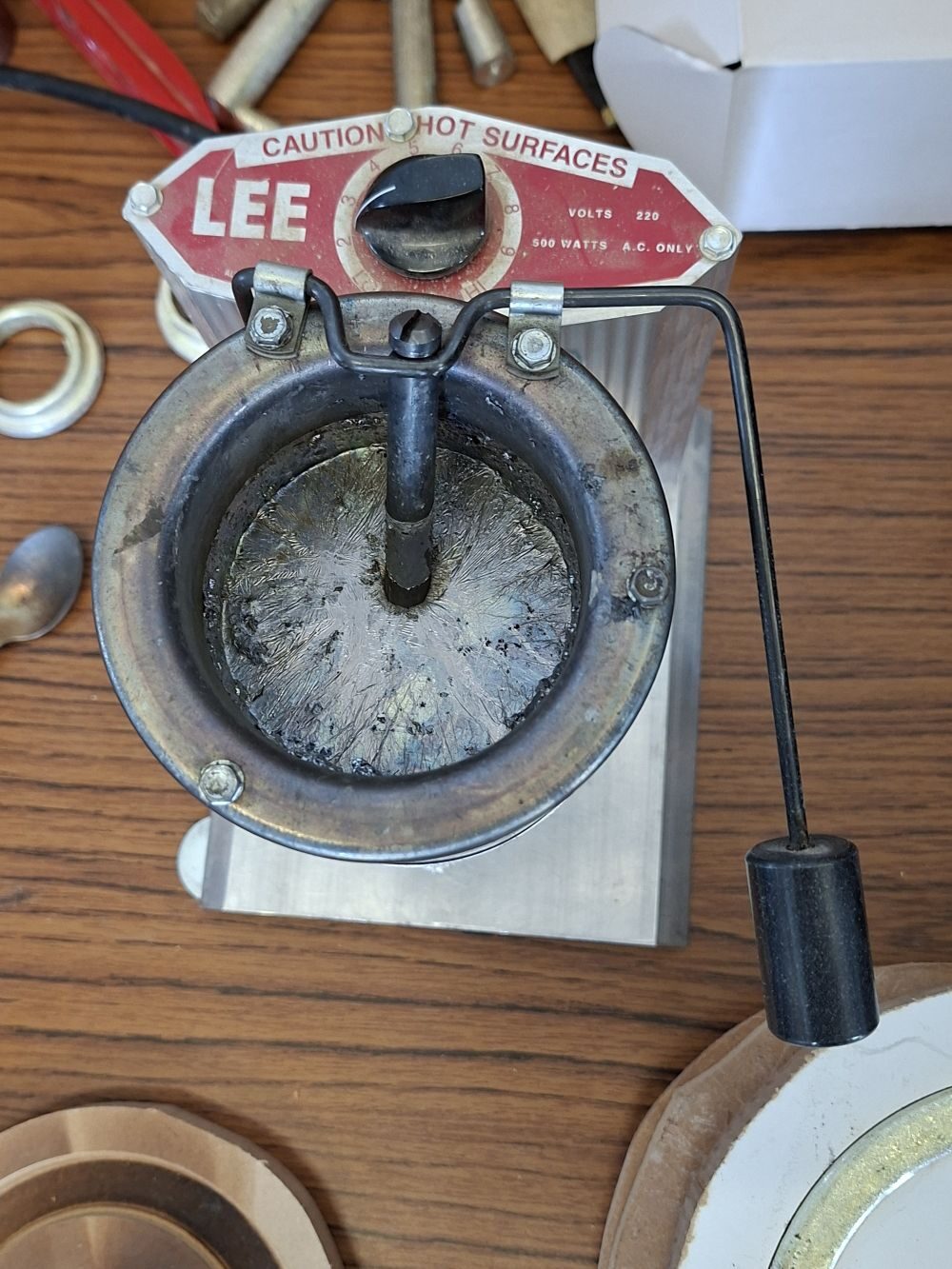
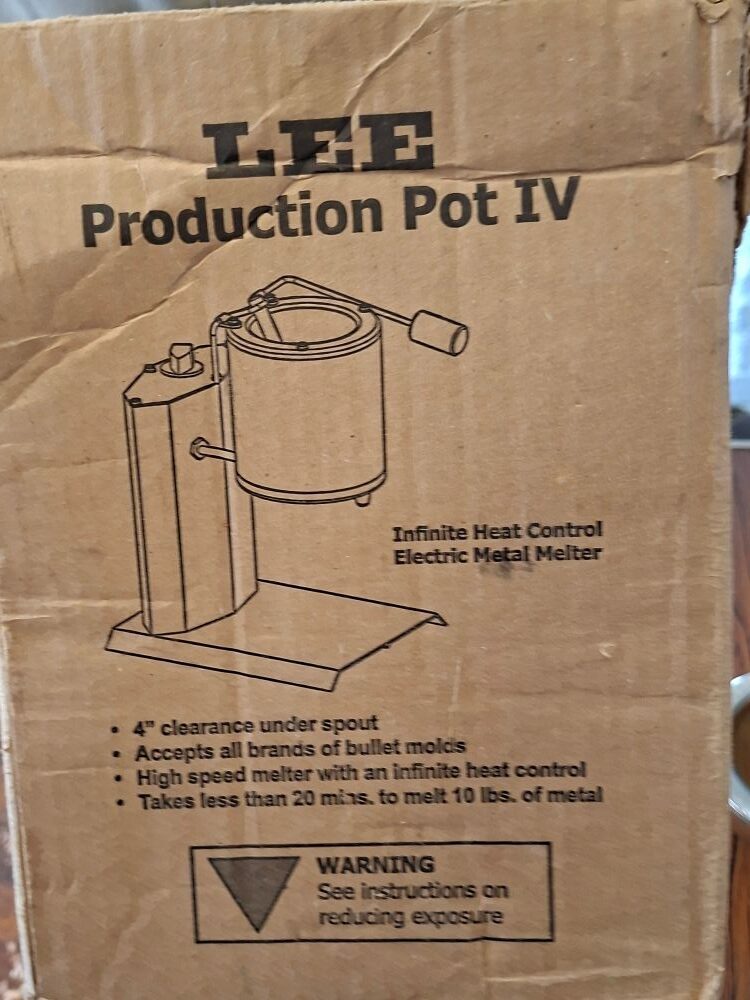
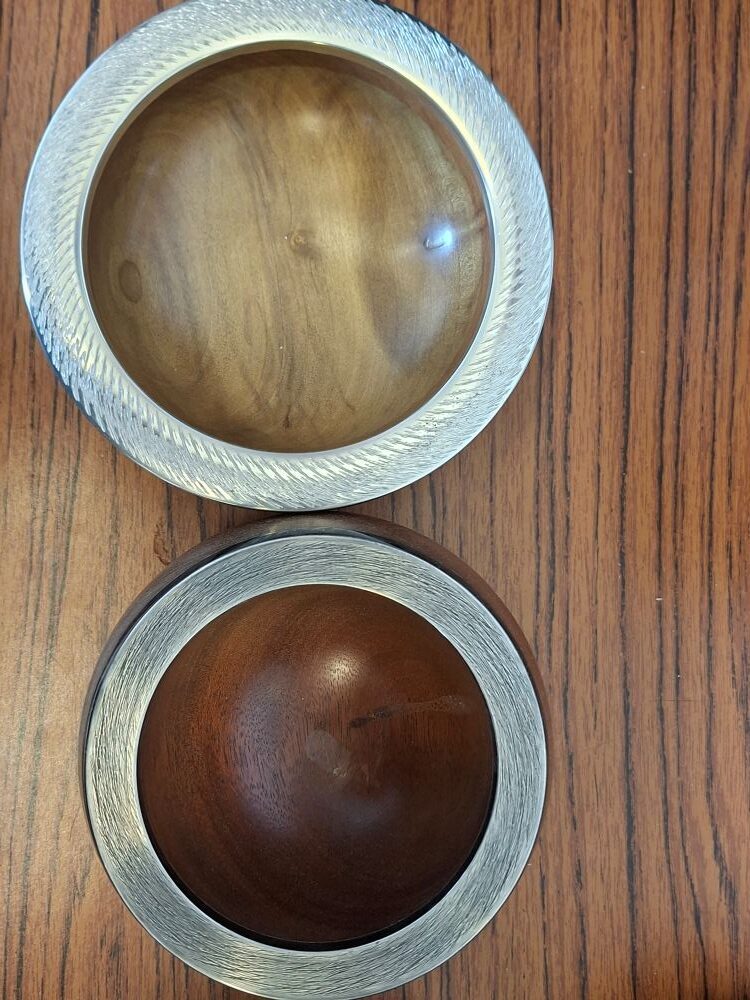
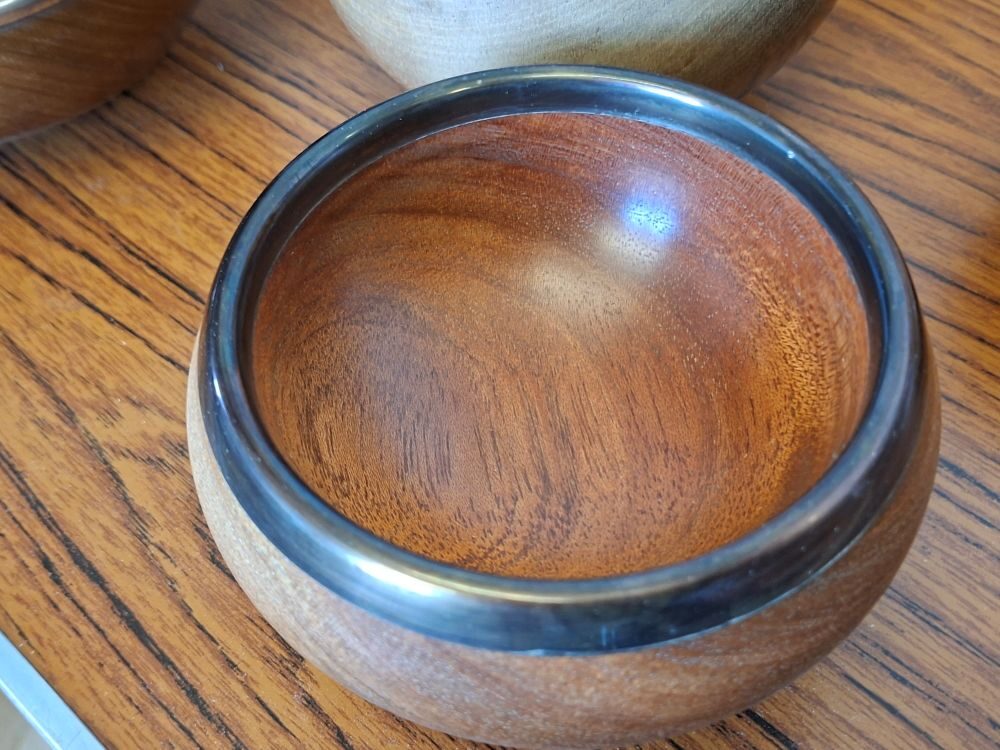
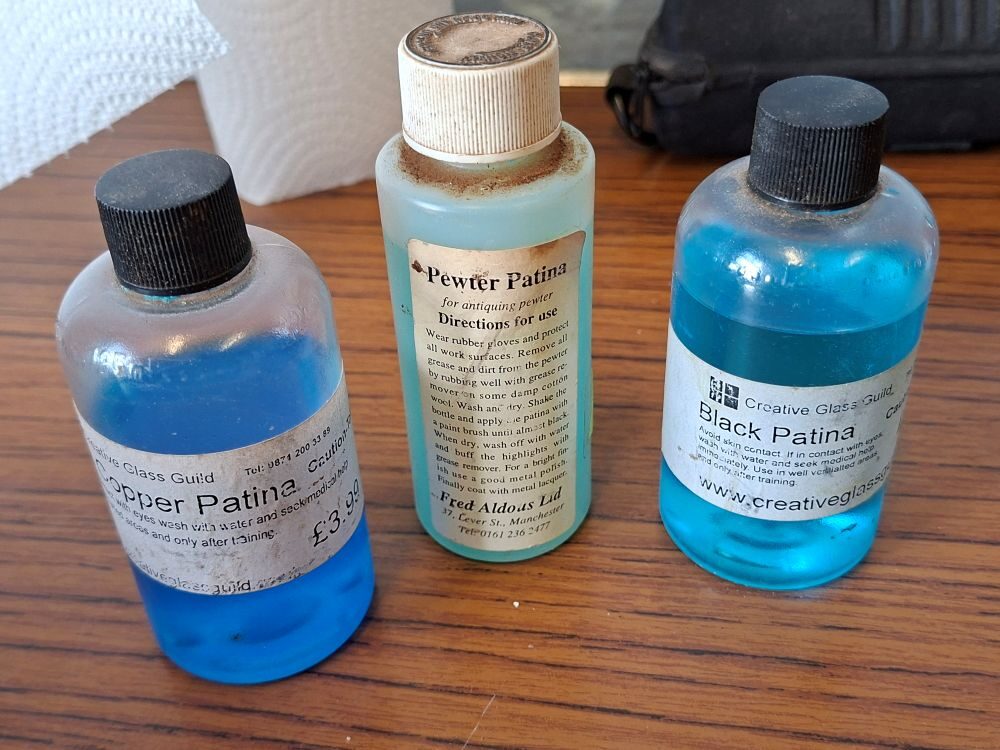
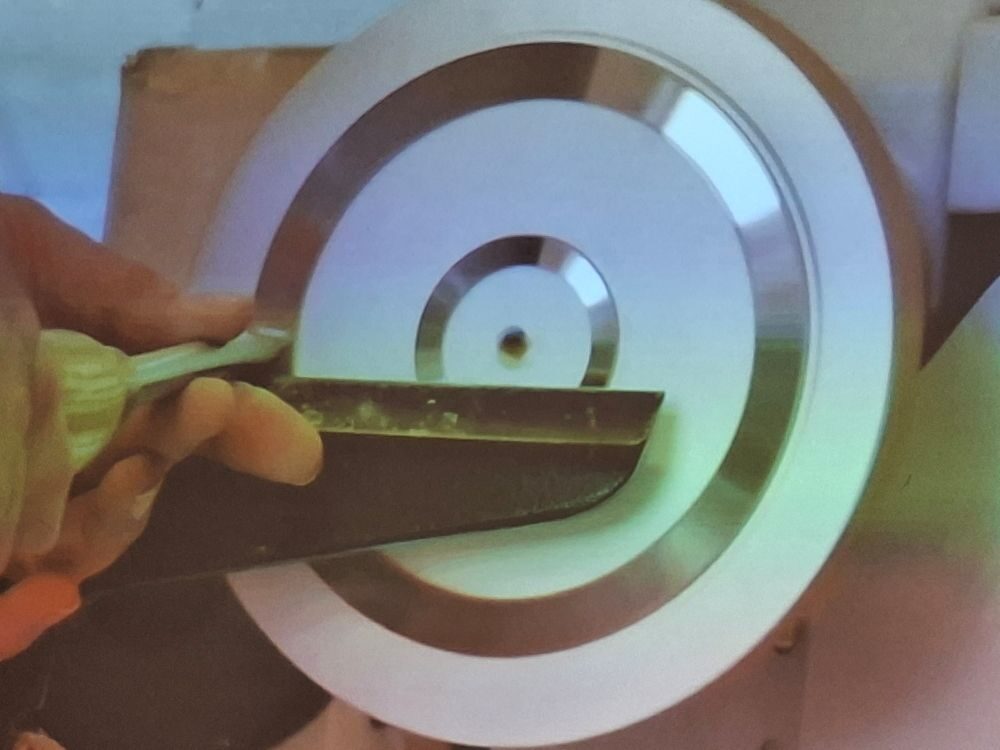
As well as texturing you can create a black rim using a chemical patina fluid and three examples are shown. Don't use ones designed for lead, you need ones that work on tin or copper. The next task is to remount the mould in the lathe and to face it off ensuring that there are no holes or blemishes. Paul then cut a tenon in the pewter to exactly match the mortice on the bowl. Paul puts paper on the lathe bed to catch any pewter shavings and these go straight back into the pot to re-melt.
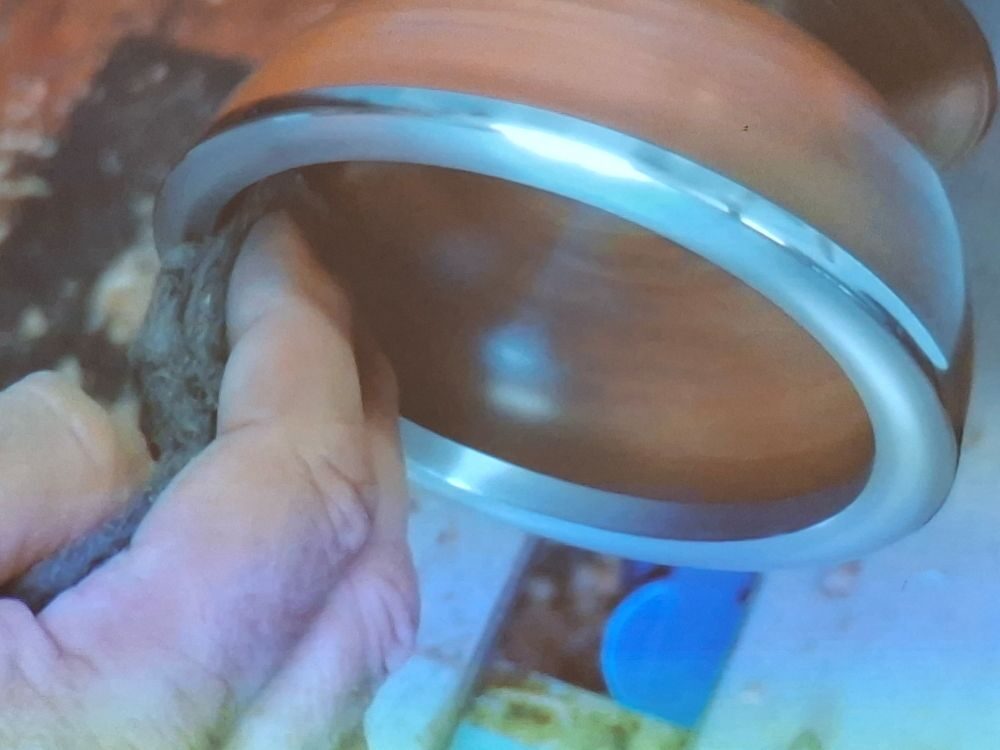
Paul releases the rim from the mould by using a parting tool either side of it and then gently levering it out. The rim is then stuck onto the bowl and then remounted onto the lathe for shaping. The rim is cast slightly oversized so that a smooth transition from pewter to wood can be obtained (cut from wood to pewter to avoid any staining). The inside of the bowl can now be cored out and again create a smooth transition to the rim. The rim is now polished with 0000 grade wire wool followed by a chrome cleaner (Paul uses Autosol Solvol) being careful to avoid staining the wood. The wood part can now be finished.
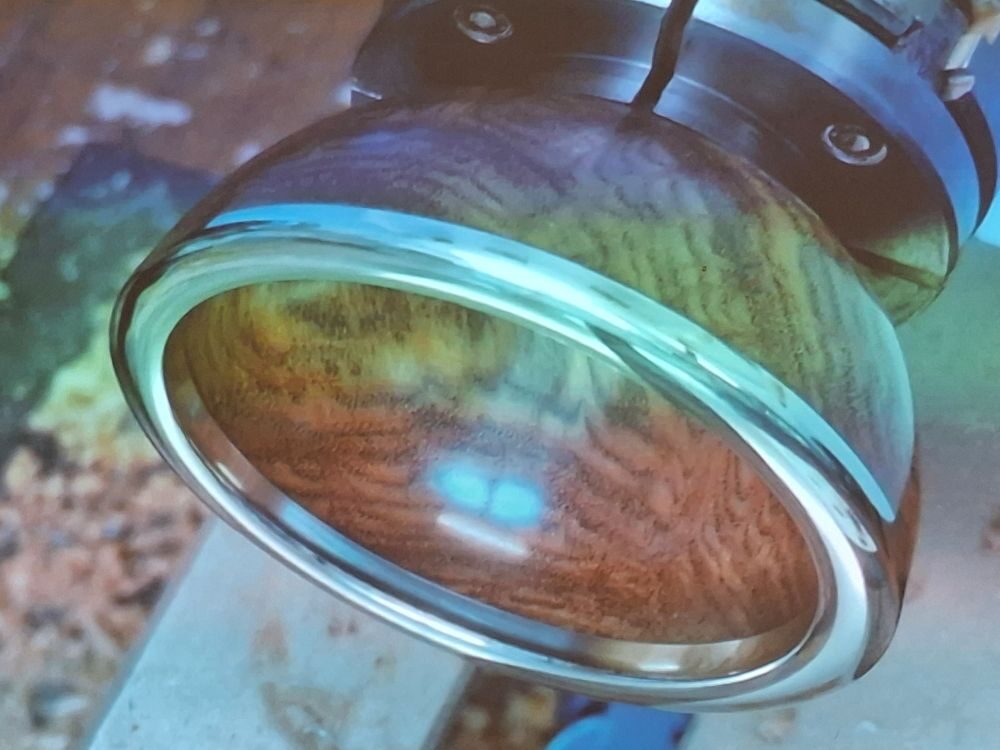
The foot is cut in the same way ready to be glued on last of all. Note the paper around the jaws to minimise any scratching. The bowl is then remounted using a jam chuck and the bottom shaped down to a nub and a mortice cut to locate the foot and then polished. Paul takes the nub off by using a simple small sanding disk glued into a wooden mandrel for the jaws. After finishing the bottom, the foot is stuck on to complete the project.
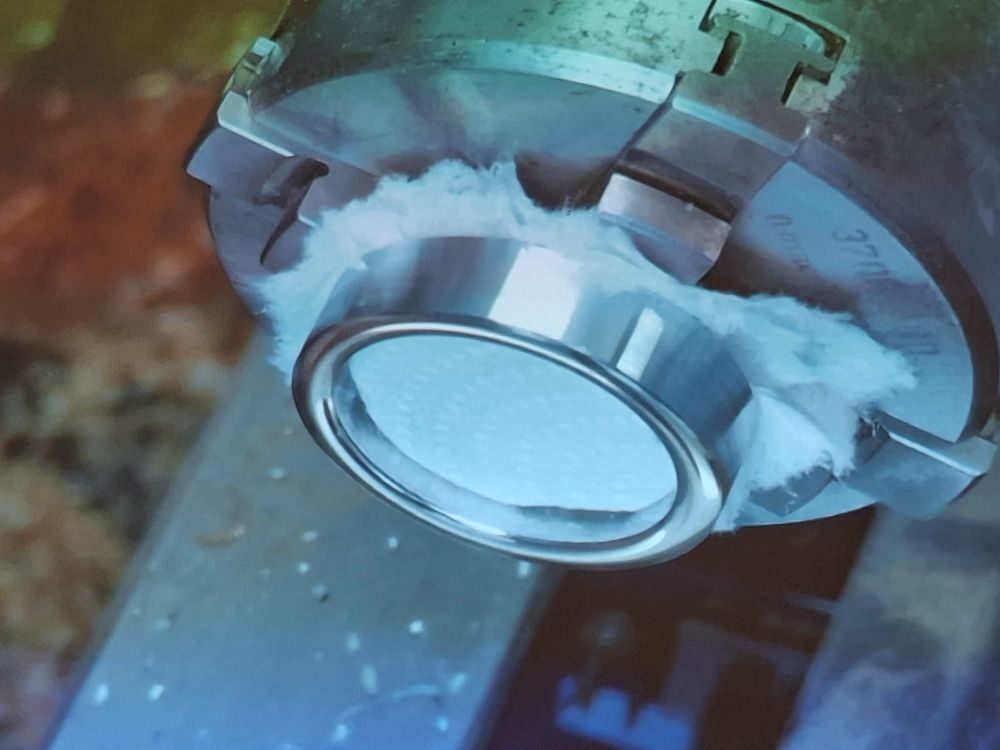
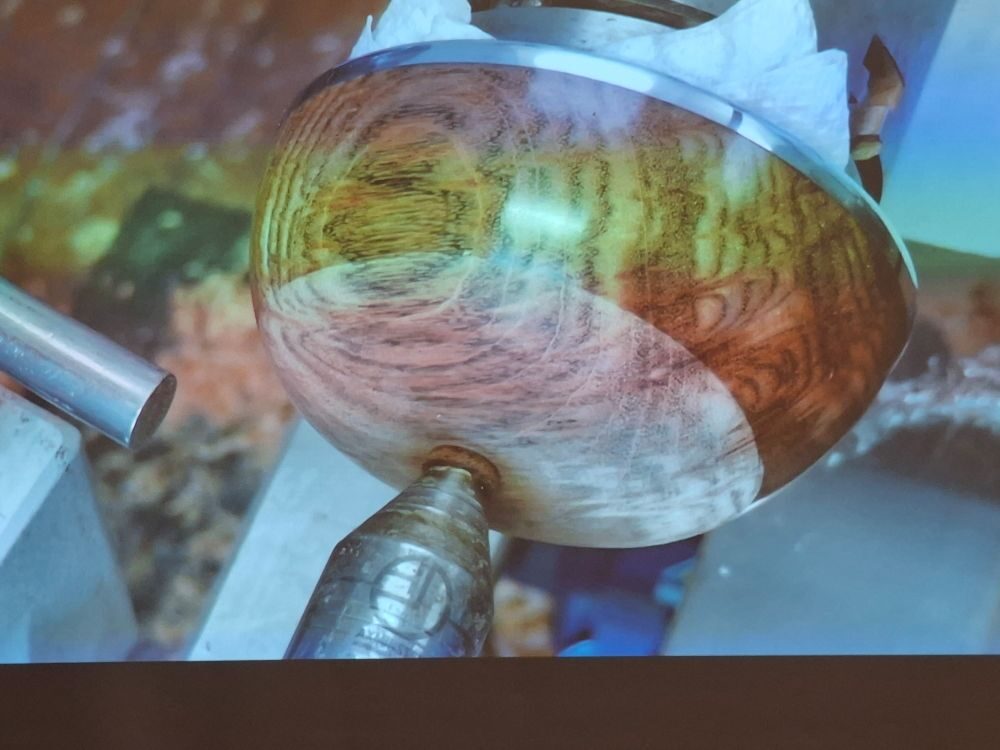
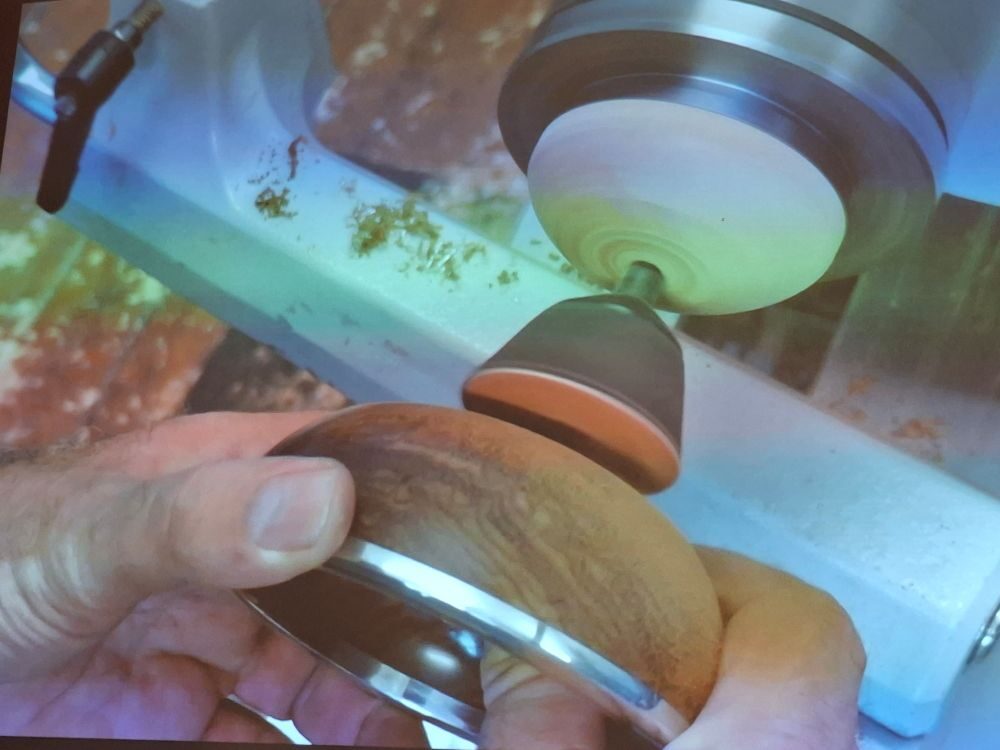
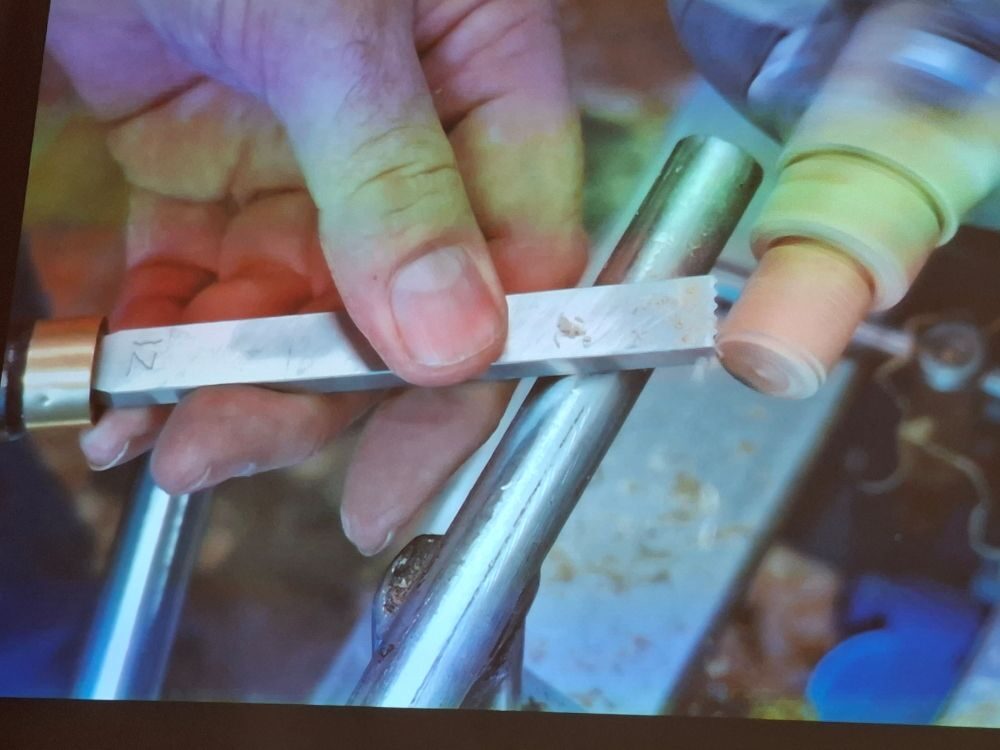
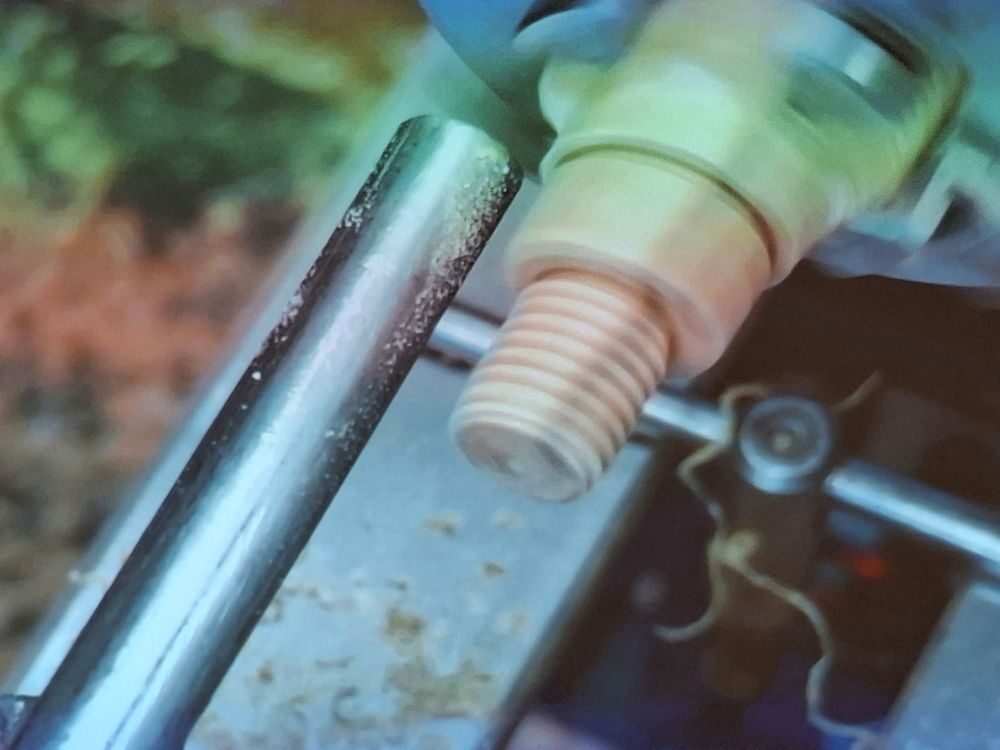
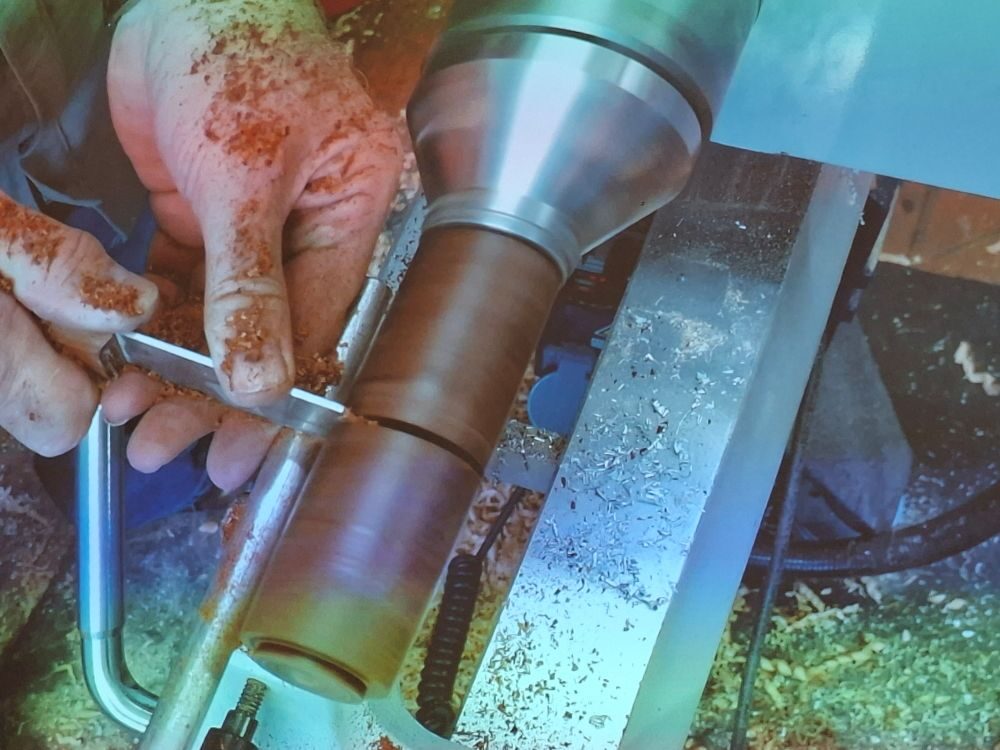
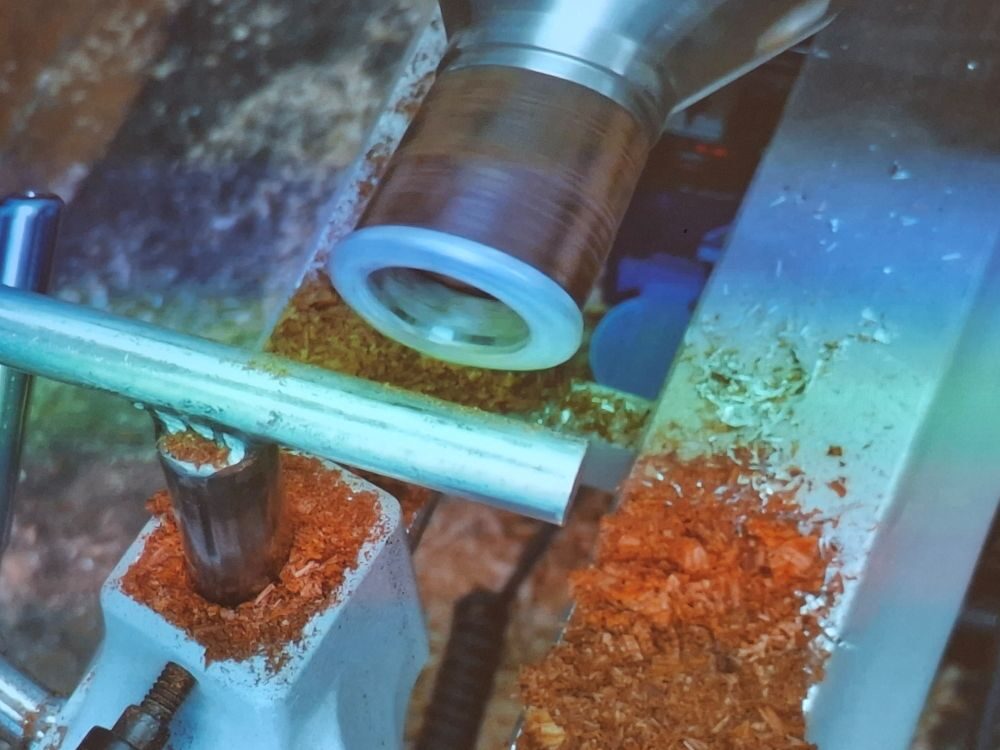
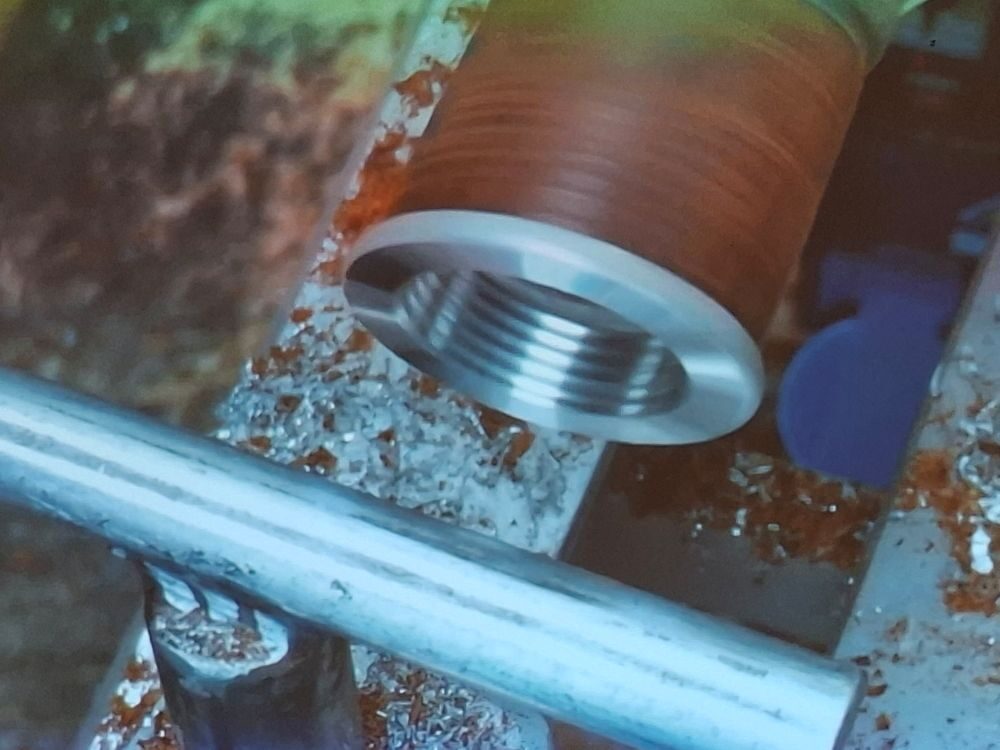
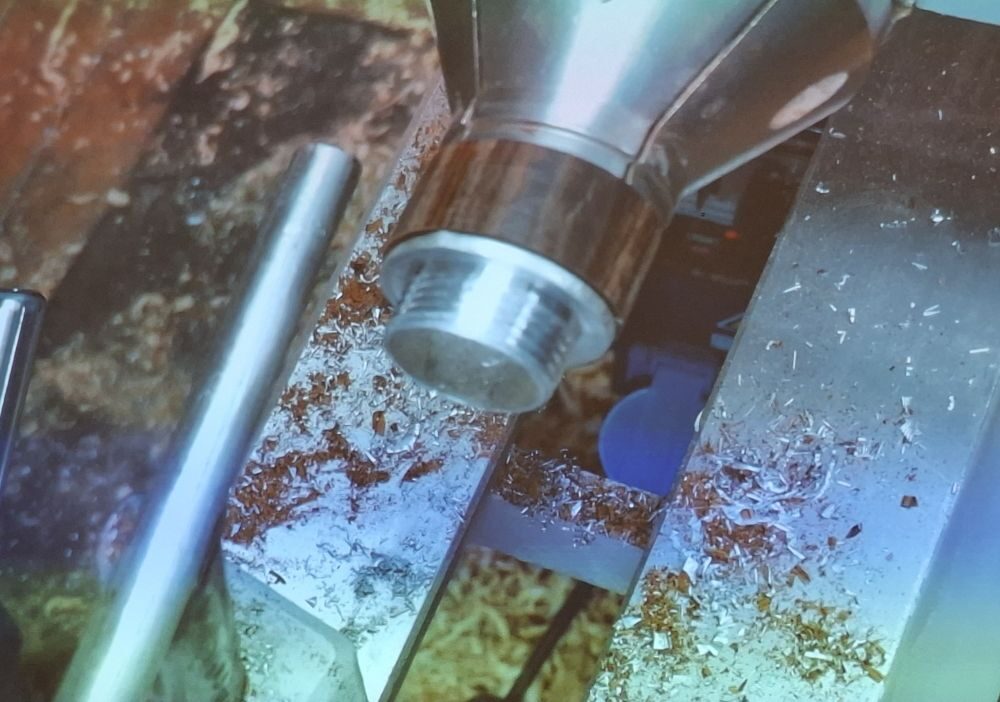
Paul then showed the technique he uses to cut threads before preparing a piece of Cocobolo to make a threaded box using pewter. He had precast the sections for the box threads and showed how the thread cutter works just as well on pewter.
A very good day and our thanks to Paul Hannaby.
Demo information from Paul
The pewter I buy from the Pewter Sheet Company in the midlands. They don't do a "click and buy" website but you can contact them for a price and pay by bank transfer or cheque. Ask for casting pewter. http://www.pewtersheet.co.uk
The chemicals were pewter patina (or black patina) and copper patina. Make sure you get ones intended for use on tin/pewter as some of those made for lead don't work too well on tin.
These might work but it might be worth checking with the supplier first -
https://www.pearsons-glass.co.uk/copper-patina
https://www.pearsons-glass.co.uk/black-patina-bp
All the scrapers I used were custom ground by myself (albeit from off the shelf tools). The two round bar scrapers were made from 1/2" HSS bar and the box finishing scraper was ground from a 1" square scraper.
This video from my Youtube channel might be of interest to your club members. Click on it to go to Youtube